
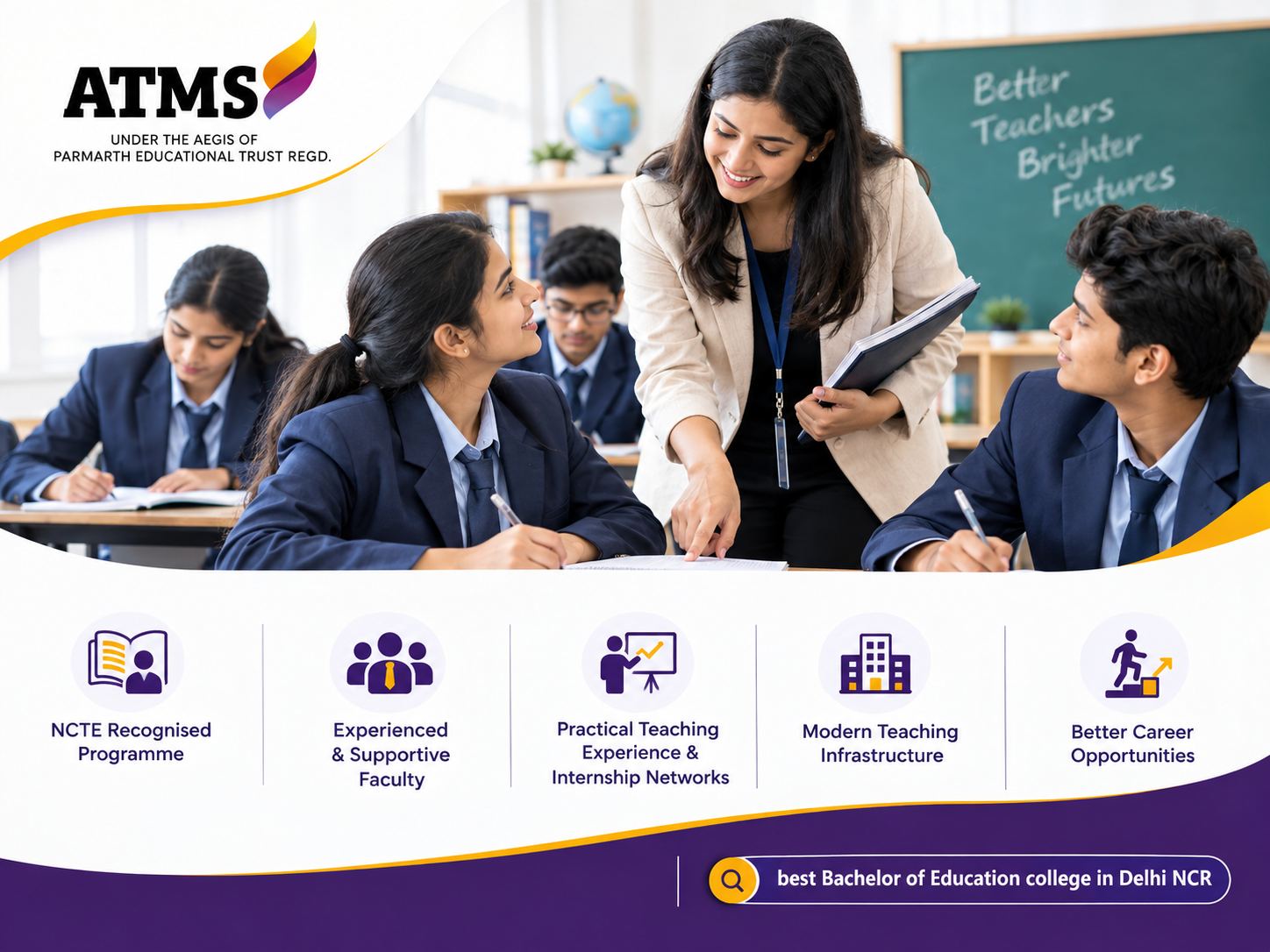

Choosing the right B.Ed. programme starts with understanding what effective teacher training should actually develop. Teaching requires much more than subject knowledge—it demands confidence, communication, empathy, creativity, and strong classroom management skills. A teacher may have excellent academic knowledge, but the ability to explain concepts clearly, understand different learners, and create an engaging classroom environment is equally important.
A structured teacher-training programme plays an important role in developing these qualities. Students considering the Bachelor of Education college in Delhi NCR should look beyond brochures and focus on how effectively an institution combines academic learning with practical teaching experience. A well-designed Bachelor of Education (B.Ed.) programme can help transform theoretical knowledge into classroom-ready skills through lesson planning, communication, digital teaching tools, assessment techniques, classroom practice, and leadership development.
In this article, we explore the key skills a B.Ed. programme can help future educators develop, why these skills matter in real classroom situations, and what prospective students should consider when selecting the right institution for their teacher-training journey.
Why Becoming an Effective Educator Requires More Than a Degree
Ask any experienced teacher what makes their job challenging, and very few will say it is simply the subject matter. The real challenges often involve people — engaging restless students, addressing different learning abilities, communicating with parents, and coordinating effectively with colleagues. Modern educators are expected to bring together a wide range of professional competencies that go far beyond academic knowledge.
For students researching the Bachelor of Education college in Delhi NCR, it is worth looking beyond the degree itself and considering how a program helps develop the practical skills a real classroom demands:
- Subject knowledge – a strong understanding of the content being taught
- Pedagogical knowledge – knowing how to teach effectively, not just what to teach
- Communication skills – explaining concepts clearly and confidently
- Emotional intelligence – understanding student emotions, concerns, and motivations
- Classroom management – creating a structured, respectful, engaging environment
- Lesson-planning ability – turning curriculum objectives into meaningful activities
- Digital literacy – using technology to enhance the learning experience
- Assessment skills – evaluating whether learning objectives were achieved
- Problem-solving – responding effectively to unexpected classroom situations
- Leadership – guiding students and taking responsibility for outcomes
- Adaptability – adjusting strategies for different learners and subjects
- Inclusive teaching practices – helping every student participate and progress
A structured teacher-education program is designed to build these competencies through academic learning, practical exposure, and continuous feedback — skills that are difficult to develop through trial and error alone. This is why choosing the right B.Ed. program matters, and why students exploring a Bachelor of Education college in Delhi NCR often weigh curriculum quality, faculty expertise, and practical exposure as heavily as location or fees.
What Skills Does a B.Ed. Program Help You Develop?
A Bachelor of Education program prepares aspiring teachers with the academic knowledge, practical expertise, and professional skills required to succeed in modern classrooms.
Effective Communication Skills
At the heart of good teaching is the ability to communicate clearly — not just with students, but also with parents, colleagues, and school administrators. A B.Ed. curriculum helps students build verbal communication, presentation skills, active listening, and effective questioning techniques. These abilities allow future teachers to explain concepts in age-appropriate language, deliver lessons confidently, and encourage meaningful classroom discussion. Confidence in communication develops gradually through practice teaching, peer feedback, and repeated exposure to real classrooms.
Classroom Management Skills
Effective classroom management is essential for a structured, positive, and engaging learning environment. Trainee teachers learn to set clear expectations, encourage engagement, manage classroom time, handle behavioural challenges, and apply inclusive practices. These skills are refined through supervised teaching practice, where trainees work with real students under experienced mentors — one reason practical exposure matters so much when comparing institutions.
Lesson Planning and Pedagogical Skills
Turning a syllabus into an engaging lesson requires careful planning. B.Ed. programs teach students to define clear learning objectives, select suitable teaching strategies, design classroom activities, choose appropriate resources, build in assessment checkpoints, and give constructive feedback. This structured approach to lesson design is one of the most transferable skills a future teacher can develop.
Educational Psychology and Understanding Learners
No two students learn the same way, which makes educational psychology central to good teaching. B.Ed. courses cover individual learning differences, motivation, cognitive development, emotional needs, learning difficulties, and student-centred approaches — knowledge that helps teachers adapt rather than expecting every learner to fit one mould.
Digital Teaching and Technology Skills
Modern classrooms increasingly rely on technology. B.Ed. curricula introduce students to smart classrooms, digital learning resources, multimedia presentations, online teaching platforms, educational applications, and digital assessment tools — building the technological comfort today’s classrooms expect.
Assessment and Evaluation Skills
B.Ed. programs train future educators in formative and summative assessment, classroom tests, assignments, observation-based evaluation, and learning-outcome analysis, along with giving specific, actionable feedback. This turns assessment into a tool for improvement rather than just a grading exercise.
Leadership and Decision-Making
Teachers are mentors, role models, and coordinators as much as instructors. Training builds a sense of responsibility, confident decision-making, collaboration, and problem-solving — qualities that often support career growth into coordination and leadership roles later on.
Inclusive and Empathetic Teaching
Modern classrooms bring together students of different backgrounds, abilities, and learning paces. Strong teacher training emphasizes empathy, accessibility, and respect for individual differences, helping future educators build classrooms where every learner feels valued.
B.Ed. Course Overview at a Glance
Institutional details can change, so prospective students should verify current information directly with the institution before applying. Here is a snapshot of the B.Ed. program structure as listed by ATMS Group of Institutions:
| Course Feature | Details |
| Course Name | Bachelor of Education (B.Ed.) |
| Institution | ATMS Group of Institutions |
| College Code | 417 |
| Approval | National Council for Teacher Education (NCTE), Jaipur |
| Affiliation | Chaudhary Charan Singh (CCS) University, Meerut |
| Admission Process | Through entrance examination / UPJEE counselling |
| Intake | 100 seats through counselling |
| Key Learning Areas | Pedagogy, educational psychology, curriculum development, assessment, practical teaching |
| Practical Exposure | Teaching experience, internships, and community engagement |
| Career Areas | Teaching, educational administration, curriculum development, education consulting, instructional design |
| Location | Hapur, Uttar Pradesh, within the Delhi NCR region |
Why Choosing the Right B.Ed. College Matters
The quality of teacher education shapes the rest of a teaching career. When evaluating the Bachelor of Education college in Delhi NCR, students should weigh faculty expertise, practical exposure, curriculum quality, infrastructure, internships, and career support — not just brand recognition.
Recognition and Affiliation
Confirm the institute is approved by NCTE and affiliated with a recognized university — this directly affects the validity of your degree.
Experienced Faculty
Faculty who have worked as educators themselves bring grounded, practical mentorship that textbooks can’t replicate.
Practical Teaching Exposure
Genuine internships and teaching practice are often what separate confident graduates from underprepared ones.
Curriculum Quality
A strong curriculum balances educational theory with hands-on teaching skills.
Learning Environment
Mentorship, collaboration, and creativity shape how trainee-teachers will eventually run their own classrooms.
Why Choose ATMS Group of Institutions for B.Ed.?
Based on the official ATMS website, the B.Ed. program is built around:
- A comprehensive curriculum blending theory with practical experience
- Experienced faculty offering mentorship, not just lectures
- Hands-on learning through teaching practice, internships, and community engagement
- Holistic development through co-curricular activities and leadership opportunities
- Flexible learning options, including online and evening classes
- Specialization opportunities in special education, educational leadership, and technology integration
Readers can review complete program details, eligibility, and the admission process on the official ATMS B.Ed. program page.
How Practical Experience Builds Teacher Confidence
Theoretical knowledge gives you the framework, but practical teaching experience turns that framework into instinct. Through supervised practice teaching, student-teachers learn to speak confidently in front of a class, adapt lesson plans on the fly, read student behaviour in real time, manage classroom situations, and build genuine professional confidence rather than rehearsed confidence.
Career Opportunities After a B.Ed.
A B.Ed. qualification can prepare graduates for a variety of roles across the education sector, depending on their interests, skills, qualifications, and applicable eligibility requirements.
Potential Career Roles
- School Teacher / Classroom Teacher
- Educational Administrator
- Curriculum Developer
- Education Consultant
- School Counselor
- Special Education Teacher
- Instructional Designer
- Academic Coordinator
Note: Specific job eligibility may vary according to employer requirements, applicable regulations, recruitment rules, and the type of institution.
Skills That Help Future Educators Stand Out
A successful educator needs more than academic knowledge. Developing practical and professional skills can help future teachers become confident and effective in diverse learning environments.
Key Skills to Develop
- Strong Communication: Communicate ideas clearly and understand students’ needs.
- Digital Literacy: Use classroom technology and digital assessment tools effectively.
- Classroom Management: Maintain an engaging, respectful, and productive learning environment.
- Critical Thinking & Creativity: Design meaningful lessons and solve classroom challenges.
- Emotional Intelligence: Understand students’ perspectives and respond with empathy.
- Leadership & Collaboration: Work effectively with students, teachers, parents, and educational teams.
- Lifelong Learning: Continue developing knowledge, teaching methods, and professional capabilities.
How to Choose a Bachelor of Education College in Delhi NCR
Choosing the right B.Ed. institution requires careful evaluation rather than relying only on promotional claims. Consider the following factors before making a decision:
Verify Recognition and Affiliation
Check whether the institution and programme have the relevant recognition and affiliation from applicable regulatory and university bodies.
Examine the Curriculum
Look for a curriculum that provides a healthy balance between educational theory, practical learning, teaching methodology, and classroom application.
Check Faculty Qualifications
Review faculty qualifications, teaching experience, subject expertise, and their approach to student mentoring.
Evaluate Practical Teaching Exposure
Give importance to teaching practice, internships, school exposure, workshops, and other opportunities that help develop classroom confidence.
Assess Infrastructure and Learning Resources
Consider classrooms, libraries, laboratories, digital learning facilities, teaching aids, and other resources available to B.Ed. students.
Understand Admission Requirements
Review eligibility criteria, admission procedures, documentation requirements, counselling processes, and important deadlines.
Review Course Structure and Specializations
Understand the subjects, teaching methodologies, electives, practical components, and specialization options offered within the programme.
Explore Career Guidance
Check whether the institution provides career counselling, professional development, placement assistance, or other career-support initiatives where applicable.
Visit the Official Website
Use the institution’s official website to verify current information about programmes, admission procedures, recognition, facilities, and contact details.
Compare Colleges Using Evidence
Compare institutions based on verified information, academic quality, practical exposure, faculty, infrastructure, and student support—not advertisements alone.
Make an Informed Decision
Working through this checklist can help prospective B.Ed. students evaluate their options more objectively and identify the Bachelor of Education college in Delhi NCR according to their academic goals, career plans, and learning expectations.
Frequently Asked Questions About B.Ed.
What is a Bachelor of Education (B.Ed.)?
A professional teacher-training degree combining educational theory — pedagogy, psychology, curriculum design — with supervised practical teaching experience.
What skills can students develop through a B.Ed. program?
Communication, classroom management, lesson planning, assessment, digital teaching, leadership, and inclusive teaching skills.
Why is practical teaching experience important in B.Ed.?
It helps trainee-teachers apply theory in real classrooms, building confidence and hands-on management skills lectures alone cannot provide.
What career opportunities are available after a B.Ed.?
Classroom teacher, educational administrator, curriculum developer, education consultant, school counselor, and instructional designer, subject to employer and regulatory eligibility rules.
How should students choose a Bachelor of Education college in Delhi NCR?
Evaluate recognition, affiliation, faculty experience, curriculum quality, and practical exposure directly through the official college website.
What should students check before applying for a B.Ed. program?
NCTE approval, university affiliation, admission process, intake capacity, and curriculum structure.
What is the role of educational psychology in teacher training?
It helps future teachers understand learning differences, motivation, cognitive development, and emotional needs.
How can a B.Ed. help students become confident educators?
Through a combination of theoretical grounding and repeated, supervised practical teaching.
Conclusion
Becoming an effective educator takes more than subject knowledge — it requires communication skills, classroom-management ability, sound lesson planning, digital comfort, and genuine empathy for learners. A well-structured B.Ed. program builds exactly these competencies through educational theory combined with practical, supervised teaching experience.
As classrooms evolve with new technology and more diverse learners, well-trained educators matter more than ever. This is why the choice of institution matters — verifying recognition, affiliation, faculty experience, and practical exposure should guide any decision, especially for students researching the Bachelor of Education college in Delhi NCR. Explore the complete program details on the official ATMS B.Ed. page and connect with the admissions team for current information.


