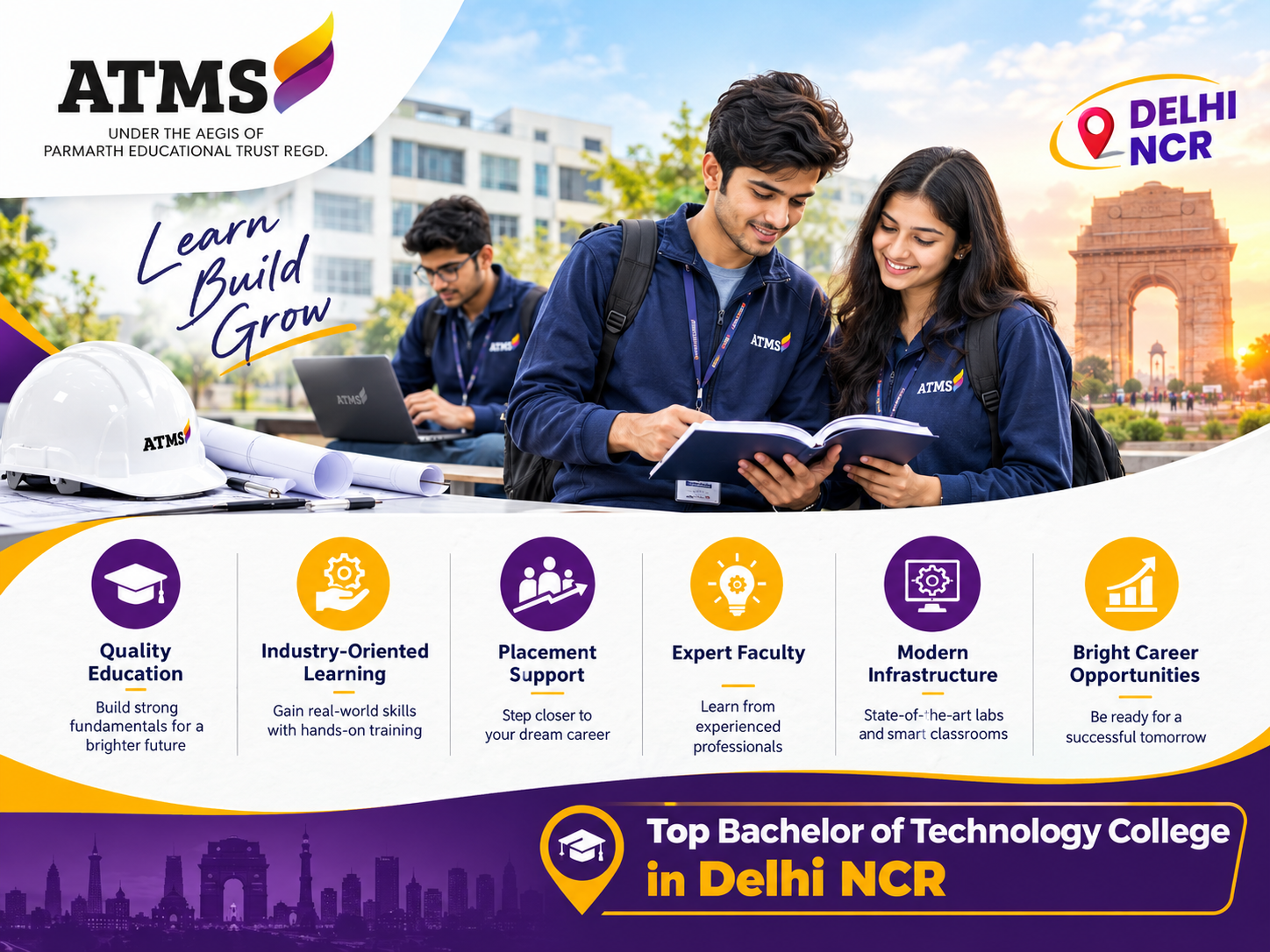

Choosing the right engineering college is one of the most important decisions a student makes after completing school. With hundreds of institutions across India offering technical education, the National Capital Region (NCR) has emerged as one of the most preferred destinations for engineering aspirants. If you are planning your future in technology, enrolling in a Bachelor of Technology College in Delhi NCR can shape not just your academic knowledge but also your entire career trajectory.
In this article, we will explore why Delhi NCR has become a hub for engineering education, what makes a B.Tech program valuable, how to evaluate colleges before taking admission, and answer the most common questions students and parents ask before making this life-changing decision.
The Growing Importance of a B.Tech Degree
A Bachelor of Technology (B.Tech) is a four-year undergraduate engineering degree that equips students with technical, analytical, and problem-solving skills across various specializations such as Computer Science, Mechanical Engineering, Electronics, Civil Engineering, and more. As industries increasingly rely on technology, automation, and data-driven decision-making, the demand for skilled engineers has grown exponentially.
Choosing a Bachelor of Technology College in Delhi NCR gives students an advantage because the region is not only India’s political capital but also a thriving commercial and industrial hub. This means access to internships, live projects, guest lectures from industry experts, and placement opportunities that many other regions simply cannot match.
Why Delhi NCR is an Ideal Location for B.Tech Studies
1. Proximity to Corporate and Industrial Hubs
Delhi NCR houses thousands of companies ranging from IT giants and manufacturing units to start-ups and multinational corporations. Being close to these organizations allows engineering students to gain practical exposure through internships, industrial visits, and live projects — something that significantly enhances employability.
2. Strong Educational Ecosystem
The region has a long-standing reputation for academic excellence. Numerous reputed universities, research centers, and technical institutions are located here, creating a competitive yet collaborative environment that pushes students to perform better.
3. Access to Skilled Faculty
Because of its central location and connectivity, Delhi NCR attracts experienced faculty members, researchers, and industry professionals who often take up teaching or guest lecturing roles. Learning from people with real-world experience adds significant value to classroom education.
4. Networking and Career Opportunities
Attending a Bachelor of Technology College in Delhi NCR also means being part of a vast alumni and professional network. This can open doors to job referrals, mentorship, and collaborative projects long after graduation.
5. Excellent Infrastructure and Connectivity
With well-developed metro networks, highways, and public transport, Delhi NCR ensures that students can commute easily, attend seminars, workshops, and job fairs across the region without logistical hurdles.
Key Factors to Consider When Choosing a B.Tech College
Before finalizing admission, students should evaluate colleges on the following parameters:
- Accreditation and Approvals: Ensure the college is approved by AICTE and affiliated with a recognized university.
- Curriculum Relevance: Check whether the syllabus is updated according to current industry trends, including emerging fields like Artificial Intelligence, Data Science, and IoT.
- Faculty Expertise: Experienced faculty with academic and industry backgrounds add more value to learning.
- Infrastructure: Well-equipped laboratories, libraries, computer centers, and hostel facilities matter for a smooth learning experience.
- Placement Record: A strong placement cell with tie-ups to reputed companies is a strong indicator of the college’s credibility.
- Industry Collaborations: Partnerships with companies for internships, training programs, and live projects add practical value to the degree.
- Location Advantage: A Bachelor of Technology College in Delhi NCR offers geographical benefits that colleges in smaller cities may not provide.
Popular B.Tech Specializations and Course Overview
Below is a general overview of common B.Tech specializations offered by engineering colleges, along with typical duration and eligibility criteria. Fee structures and specific curriculum details vary between institutions, so students should always verify updated information directly with their shortlisted college.
| B.Tech Specialization | Duration | Eligibility | Career Scope |
| Computer Science Engineering (CSE) | 4 Years | 10+2 with Physics, Chemistry, Mathematics | Software Developer, Data Scientist, Systems Engineer |
| Information Technology (IT) | 4 Years | 10+2 with PCM | Web Developer, Network Engineer, IT Consultant |
| Electronics & Communication Engineering (ECE) | 4 Years | 10+2 with PCM | Embedded Systems Engineer, Telecom Engineer |
| Mechanical Engineering | 4 Years | 10+2 with PCM | Design Engineer, Production Engineer, R&D |
| Civil Engineering | 4 Years | 10+2 with PCM | Site Engineer, Structural Engineer, Urban Planner |
| Electrical Engineering | 4 Years | 10+2 with PCM | Power Systems Engineer, Control Systems Engineer |
| Artificial Intelligence & Machine Learning | 4 Years | 10+2 with PCM | AI Engineer, ML Researcher, Data Analyst |
| Computer Science with Data Science | 4 Years | 10+2 with PCM | Data Analyst, Business Intelligence Engineer |
| Biotechnology Engineering | 4 Years | 10+2 with PCM/PCB | Research Associate, Biomedical Engineer |
| Automobile Engineering | 4 Years | 10+2 with PCM | Automotive Design Engineer, Quality Engineer |
Note: Course structure, semester breakdown, and elective options may vary from college to college. Always refer to the official prospectus of your chosen institution for accurate details.
Benefits of Studying at a Well-Ranked B.Tech College in Delhi NCR
Enhanced Employability
Graduates from a Bachelor of Technology College in Delhi NCR often have an edge in the job market due to strong industry connections, internship exposure, and skill-based training integrated into the curriculum.
Exposure to Modern Technology
Reputed colleges continuously update their labs and teaching methodologies to include modern tools such as cloud computing platforms, IoT kits, robotics equipment, and AI-based software, helping students stay industry-ready.
Holistic Development
Beyond academics, good colleges also focus on soft skills training, communication workshops, personality development sessions, and extracurricular activities like technical fests, hackathons, and sports events.
Research and Innovation Opportunities
Many colleges encourage students to participate in research projects, paper publications, and innovation challenges, which strengthens their resume for higher studies or specialized job roles.
Strong Alumni Network
A well-established alumni base can be extremely helpful for mentorship, referrals, and staying updated with industry trends even after graduation.
Admission Process for B.Tech Programs
While the exact admission process may differ from college to college, the general steps typically include:
- Entrance Examination: Many colleges consider scores from national or state-level engineering entrance exams, while some also offer direct admission based on 10+2 marks.
- Application Submission: Students need to fill out the admission form along with required academic documents.
- Counseling/Interaction: Some colleges conduct a counseling session or interview to understand the student’s aptitude and interest areas.
- Document Verification: Original mark sheets, identity proof, and category certificates (if applicable) are verified.
- Fee Payment and Confirmation: Once verified, students complete the fee payment process to confirm their seat.
It is advisable to start the research process early, compare multiple colleges, attend open days or counseling sessions, and speak with current students or alumni before making a final decision.
Career Prospects After B.Tech
A B.Tech degree opens doors to a wide range of career paths, including:
- Core Engineering Roles: Working in manufacturing, construction, power, or automobile industries.
- IT and Software Roles: Software development, application testing, cybersecurity, and cloud computing.
- Data-Driven Roles: Data analytics, business intelligence, and machine learning engineering.
- Higher Education: Pursuing M.Tech, MBA, or specialized certifications in India or abroad.
- Entrepreneurship: Many engineering graduates go on to start their own tech ventures, especially given the start-up ecosystem thriving in Delhi NCR.
- Government Sector Jobs: Opportunities in public sector undertakings (PSUs) and government departments through competitive exams like GATE.
Tips for Making the Right College Choice
- Visit the campus physically if possible, or take a virtual tour.
- Talk to current students and alumni about their honest experience.
- Compare placement statistics over the last three to five years rather than a single year.
- Check whether the college offers value-added certifications alongside the regular curriculum.
- Evaluate the hostel, transport, and safety facilities if you’re an outstation student.
- Look for colleges that emphasize practical learning through labs, workshops, and industry projects.
Conclusion
Selecting the right institution is the foundation of a successful engineering career. A Bachelor of Technology College in Delhi NCR offers the perfect blend of academic rigor, industry exposure, and career growth opportunities due to its strategic location, strong educational ecosystem, and connectivity to major corporate hubs. Whether you’re interested in Computer Science, Mechanical, Civil, Electronics, or emerging fields like AI and Data Science, Delhi NCR provides a nurturing environment to build the technical and professional skills required for long-term success.
Before finalizing your decision, take time to research thoroughly, compare course structures, placement records, and infrastructure, and choose a college that aligns with your career goals and aspirations.
Frequently Asked Questions (FAQs)
1. What is the duration of a B.Tech program? A B.Tech program typically spans four years, divided into eight semesters, covering foundational subjects in the first year and specialized subjects in the following years.
2. What is the eligibility criteria for B.Tech admission? Students generally need to have completed 10+2 with Physics, Chemistry, and Mathematics as core subjects. Some colleges may also require a minimum qualifying score in relevant entrance examinations.
3. Why should I choose a college in Delhi NCR over other cities? Delhi NCR offers strong industry connectivity, better infrastructure, exposure to top companies, and a wide range of internship and placement opportunities, making it an advantageous location for engineering studies.
4. Which B.Tech specialization has the best career scope? Fields like Computer Science, Artificial Intelligence, Data Science, and Electronics & Communication currently have high demand, though a strong choice depends on individual interest and industry trends at the time of graduation.
5. Are internships mandatory during a B.Tech program? Most updated curriculums include mandatory internships or industrial training to give students hands-on experience before they graduate.
6. How important are placements when choosing a college? Placement records are an important indicator of a college’s industry reputation and the practical value of its curriculum, but they should be considered alongside faculty quality, infrastructure, and course relevance.
7. Can I pursue higher studies after completing B.Tech? Yes, after B.Tech, students can pursue M.Tech, MBA, or specialized certification courses in India or abroad to further enhance their career prospects.
8. Is it necessary to attend a college physically, or are online options available? While theoretical components of some courses may be supplemented online, B.Tech is largely a practical, lab-based degree, making physical attendance important for hands-on learning and skill development.
9. What skills should I develop apart from academics during my B.Tech journey? Communication skills, problem-solving ability, teamwork, coding proficiency (for CS-related branches), and adaptability to new technologies are equally important alongside academic performance.
10. How do I choose the best college among multiple options? Compare accreditation, faculty experience, infrastructure, placement history, industry tie-ups, and student reviews before finalizing your decision. Visiting the campus and speaking to current students can also provide valuable insights.